Saturday, July 3, 2010

Open Garden Plant Sale Sundays


Way back in the early spring, we looked at our work calendars and at daylily bloom records from the last few years, and decided to open to the daylily public on Sundays in July. We didn't notice that the first Sunday was the Fourth! -- and so while we officially start our season tomorrow, we're not expecting much in the way of traffic. And that's okay; the last-minute scramble is still underway and we still have plenty to do ... finishing some of the bed signs, some of the walkway trimming, some of the cleanup around the greenhouse. The list is long. We don't mind easing our way into this!
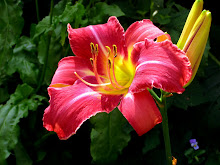
Each day, more and more daylily buds are opening ... here are some photos of some of the ones in bloom now, with lots more to come ... top to bottom: Grand Ways, Atlanta Moonlight, Maison Rouge, Shango.

Thursday, July 1, 2010

Greens 'n Things


If you’re into kale at all – I mean, even slightly – I can’t recommend Beedy’s Camden highly enough. In the past we’ve grown the Russians, red and white; Lacinato/Dinosaur; Winter curly; others I can’t remember … each of them did well enough. And then we met Beedy’s.

Selected by a farmer in Maine and sold through Fedco, this variety fairly jumps out of the ground and just keeps growing apace all season, pushing out large flat-and-curly leaves that are tender and delicious. Half a dozen seedlings went into the kitchen herb garden for those last-minute additions while cooking; the rest are up in the field with the other crops. Kale can be cut into pieces, tossed in a bag and frozen without blanching for winter soups and stews – easy to do – and you will likely have plenty extra for freezing if you grow this prolific variety.

For some reason, lettuce grows really, really well here; maybe it’s the type of soil we have, or the particulars of this mini-climate, but the heads grow to an enormous size while staying crisp and tasty. If I were into monoculture, this would be a lettuce farm! This spring we’re enjoying Black Seeded Simpson, Buttercrunch, Forellenschluss, Italienischer, Really Red Deer Tongue, and some volunteers from the varieties I let go to seed last year; there are Batavian seedlings waiting for their turn in the field for midsummer eating. Taking a note from my Pilgrim days, onions are planted in amongst the lettuce seedlings right from the start – they don’t compete for the same “air space,” and the lettuce will be gone fairly quickly while the onions take much longer.

Friday, June 25, 2010

And so it begins ...


Although there might be one or two, or several, other daylilies that open up a blossom first, Cape Cod Cousin is the one that really kicks it off for us; maybe because for so many years, it was our earliest, and the one whose buds we kept watching with anticipation.
This year's strange spring weather led us to think we were going to have an early season; we scheduled our first Open Garden Day a week earlier than we might have, and then three swift late frosts set everything back. Wisely, we held off on advertising, and now realize that there are not yet enough daylilies in bloom to open this Sunday ... nobody wants to come and look at a forest of foliage! But oh, there are hundreds and hundreds of buds quivering with promise, and we expect by the following weekend we'll be able to fling the doors open (figuratively, of course).

Tuesday, June 15, 2010


How many seedlings would you be willing to plant in the hopes of finding one special new hybrid? 10? 100? 1000? more?

The “big names” in daylily hybridizing typically make hundreds, maybe thousands of crosses and plant hundreds of thousands of seedlings each year. This, of course, requires acreage and employees and usually, a location south of the Mason-Dixon line.

But there are loads of backyard daylily growers who have a keen interest in hybridizing as well, who necessarily grow smaller numbers of seedlings, and sometimes produce a hybrid special enough to be registered.

Like so many, I started simply planting the random crosses accomplished by the flowers themselves. Those seed pods you find at the end of the season contain shiny black seeds, and if planted, many of them will germinate. The more varieties of daylilies you have, the more potential for each of these seeds to produce new and different varieties. Here in the north, seedlings will not flower the first year; this is one of those endeavors that helps to develop patience.

Most of my first batch of seedlings flowered in the second year. Like any new mother, I was entranced with my new “babies” – well, some of them, anyway! Experienced hybridizers advise waiting until the second or third year of flowering to really see what you’ve got – requiring even more patience *sigh*.

The next logical step was to purchase seeds from experienced hybridizers … and so I did. Some of those began flowering last summer: curly ruffled edges, interesting colors … whetting appetites to see what they’ll be like as second-year blooms.

Presently we have about 400 seedlings in various stages of growth. Not that many, in the world of daylilies, but more than enough to weed and fuss over. Watching them send up their first scapes is like looking at all the presents under the Christmas tree, wondering what's inside each one. Won't be too much longer now!

Monday, June 7, 2010

Little Kitchen Herb Garden


My definition of “herb” comes from having worked at a 17th-century living history museum, Plimoth Plantation, where pretty much anything other than field crops was given that appellation. Lettuce, sorrel, spinach and burnet were “sallet” herbs, and the kitchen gardens were filled with all manner of edible and medicinal plants.

When I moved to this old farm seven years ago, I planted a large herb garden, bringing slips of many of those old-fashioned herbs with me – elecampane, lemon balm, wormwood, rue, teasel, tansy, comfrey, and so on, along with the more typical kitchen herbs. This good-sized bed is perhaps 100 feet from the house; call me spoiled, but it seemed awfully far on a cold evening or a rainy day to dash out and fetch a handful of this or that while cooking.

And so a more functional kitchen herb garden was born, just three or four steps from the kitchen deck. So much better! Here I keep the perennial culinaries that I use – sage, thyme, chives, winter savory, oregano, sorrel, salad burnet – and plant the annuals that are often plucked just a few leaves at a time: spinach, kale, basil, cilantro, rosemary, bronze fennel. During the winter, our coffee grounds are easily tossed into the annual beds, and a layer of finished compost in the spring keeps everything happy.

Thursday, June 3, 2010

New farm workers have arrived!


Last night, under cover of darkness, eleven imported farm workers were slipped into their new quarters here on the farm. This was done stealthily, of course, in order not to disturb the old hands who were already sleeping soundly … the fewer dustups, the better.

A friend of a friend is moving south and needed to find a home for her one-year-old hens … and that’s exactly what I was looking for, hens who are still young but already laying. A perfect match! Besides the wonderful fresh eggs for both table and sale, we benefit from the rich combination of coop shavings and manure that gets composted and added to our growing beds.

Our “old” girls – three years old, now, and ten in number – are Barred Rocks and red hybrid layers; these new hens are White Brahmas and Red Comets. The time-tested way to introduce new additions to the flock is to wait until everyone’s asleep, slide the new ones into the coop, and when they all wake up in the morning, there’s minimum fuss. Early this morning we heard some louder-than-usual squawking coming from the direction of Coop de Ville, but by the time we climbed to hill to take a look, all the ladies seemed to be just hanging out.

And then – a faceoff in the pen: a heavy young Brahma versus an aging Red. Size and youth won out (*sigh* -- what happened to experience and cunning?), and the Red suffered some minor lacerations. Thus a new pecking order comes into being. Regime change can be a bit messy.

Only 10 eggs were collected today, but since everyone’s got eggs in the pipeline, we’ll hope that they’ll settle in and resume normal laying soon.

Tuesday, May 25, 2010

If it's not hardy, it's not worth it!


Diehard gardeners usually love to encourage others to get their hands in the dirt, hoping they'll see how rewarding it is. And there’s nothing like a successful experience to really bring pleasure. Which is why it breaks my heart a little whenever I hear of a gardening “failure” that could have been avoided … like the folks I know who planted their veggie seedlings out waaaaay too early last spring, and lost them all to frost; or the rose bush planted in such poor soil that it conked out pretty quickly. Heaven knows I’ve made plenty of mistakes myself over the years … or, perhaps I should say, I’ve had plenty of learning experiences.

And so, instead of harping on why you should plant daylilies that are 1) purchased from a grower in or near your climate zone, and/or 2) known to be good performers in your part of the world, here’s a visual aid to illustrate the point.

Several years ago, I ordered several daylilies that I knew were northern-hardy from a southern grower. Along with my order, they included a bonus … one of their newer hybridized introductions, which lists for $75 in their catalog. Wow!, I thought, that’s amazing! -- I figured it would be quite special.

Here we are, three years later. You can see that the daylilies on the left and right have normal-sized foliage for this time of year; and you can see that the ones in the center are small, thin, and grass-like. That is the three-year-old “clump” of the $75 introduction, a Zone 5-inappropriate daylily, bred to live in the South. Oh, it survives here … barely. Last year it threw up only one blossom. If I didn’t know the reason, I would have been tremendously disappointed … and if I had spent $75 for the plant, I would feel even worse.

So buy what will thrive where you live. Spend wisely. Be happy. And have a beautiful garden!