Tuesday, February 1, 2011

All Cooped Up

There seems to be nothing a Bernese Mountain Dog likes better than snow, and so our two beasts are in their element this winter. They roll in it, eat it, lie down in it, stick their faces as far as they can into snowbanks; lethargic in summer, our male is now running and romping and acting like a puppy. A two-foot snowfall doesn’t faze him in the least; he just pushes through it, chest-first, like a snowplow, leaving long winding trails all over the yard.

But the rest of us? – not loving it so much. Even the cats are grumpy from being indoors all the time, hissing and swatting at each other a few times a day before skulking off to their respective corners.

And then there’s the chickens. Yes, cabin fever strikes them as well – coop fever, maybe? – as they are as reluctant as the cats to stick their feet into snow, and stay (mostly) indoors for months at a time, by their own choice. Fortunately, our little flock of 18 doesn’t come close to filling the coop, so they have plenty of scratching room. But they get bored, and bored chickens get, well, peckish. And with nothing to peck but each other, some will eventually look a little worse for the wear.


So at this time of year, a weekly cabbage tetherball game is just the ticket. Keeps ‘em occupied and happy for a day or so, and adds more greens to their diet. Given these weekly snowstorms, though, we may have to start buying cabbage by the case.
___________________________________________

In the Hindsight Department: next time we build a greenhouse, we will make sure that there is room to run a snowblower all around the sides -- as opposed to having one side tucked up against a steep hill, and piles of rocks along the far end. Repeated heavy snowstorms mean that snow piles up and up and up along the sides as it slides off the roof; eventually it can't slide any more, and starts weighing down the entire structure. Shoveling it out the old-fashioned way is decidedly tedious and time-consuming, but necessary, in our case. Live and learn ...

Friday, January 14, 2011

Cool Chicks


We’ve finally come into winter now, the latest round of snow layering so thickly that our big dogs push through it with their chests like furry plows. The hens will only take a few steps outside, where the coop overhang shields a small border and left the ground semi-bare; they like to peck at the snow, and indeed it helps to supplement their water rations, which freeze up quickly and need to be replenished daily.

Lately I’ve been following a discussion online about animal feed. Although my flock is very small – only 18 birds at present – like many other homesteaders and farmers, I am alarmed at the great increase in feed costs over the last few years. Organic feed has more than doubled in that time; conventional has increased by 50%. While the reasons are likely many, I would imagine that the increase in fuel costs – to power the tractors, harvesters, and other farm equipment, and the transport the product to warehouses and markets – is a major factor.

It’s made many folks rethink their farm operations. Some have had to raise their egg prices as high as the market will bear, and they are still losing money. Some have reduced their flocks; some have simply given up on that aspect of their farm operation. The average person might find it hard to figure out why local free-range eggs are $4+ per dozen, when the local drugstore chain sells eggs for .99; factory-farmed, of course, and not fresh or anywhere near as nutritious, but still. Feed for cattle, sheep, pigs, and other farm animals has become more costly as well.

Nowadays there’s a lot of talk of growing your own feed grains. It’s an intriguing thought, for sure, but to do this on a scale that will provide enough feed to last through the winter requires equipment that we don’t have here – a tractor and harvesting equipment. People who have tried doing it with less report that it’s incredibly time-consuming and laborious, and simply not worth it.

An alternative is finding local farmers who are raising feed grains and purchasing from them. As it is, we buy our feed from a Vermont company, and our hens have done very well on it; during the winter they get a cabbage and some greens weekly, and flaxseed added to their feed. Of course it’s cold and dark at this time of year, and so their egg output reflects that: about 2 eggs a day right now. They’re not even close to earning their keep! Come spring, though, we’ll have higher expectations. One winter we boosted their output with a light and timer, and ended up with some prolapses; now we prefer to give them their natural winter break. Pampered girls, they are.

Friday, December 31, 2010

Snowy Farm


Winter.
Long cold nights with crisp stars shining.
Hauling firewood, feeding the furnace.
Frozen water in the chicken coop.
Sledding tracks down the hill.
Holiday frenzy, over now.
Homemade soup.
Knitting.
Seed catalogs arriving.
Days slowly getting longer.
Deer and fox tracks in the snow.
Almost time to prune the apple trees.
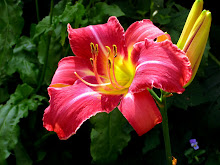
Daylily blooms, still six months away.
Waiting.

Thursday, November 11, 2010

Too Dirty for Me!


I have to confess to being one of those people who have held some romantic notions of the past, despite – or maybe because of – having portrayed early 17th century life in New Plimoth for some years. It’s so easy to think that life was more simple, straightforward, less harried and unburdened with the complexity of modern life; it can sound quite appealing. It is, perhaps, a great part of the motivation of many of us who have moved out to the country, trying to recreate to some degree a more direct and sustainable way of life.

But, of course, the reality of the past isn’t exactly what we might imagine it was. Not even close. I’ve learned this in various ways, and I’m still learning it. Right now I’m reading Where We Lived: Discovering the Places We Once Called Home by Jack Larkin, chief historian at Old Sturbridge Village. It first appealed to me as a remarkable collection of photographs of the domestic architecture of early America, most of them taken by the Library of Congress Historic American Building Survey. But what has been even more illuminating are the many passages taken from primary sources, written by American and European travelers about the various places they visited in our country’s early years, describing what they saw and experienced.

For most Americans, from the earliest European settlements up until the twentieth century, domestic life was very different from what we know today. It was common, say, to find 8-12 people living in a 3- or 4-room house, several to a bed; privacy did not exist. Today’s average household numbers 2.6, with an average of 1200 square feet per person; back in 1800, the census records show that houses in Brookfield, Massachusetts averaged about 120 square feet per person; one-tenth of the space we enjoy today. A household usually consisted of husband, wife, and children – as today – but often also included elderly parents, unmarried brothers and sisters, widowed daughters, orphaned grandchildren, even married children and their kids – not to mention any hired household or farm help. And that was the average; there was an astonishing amount of poverty as well, tumbledown shacks and hovels unimaginable to us today, people living in conditions we would now consider totally uninhabitable.

But what has really struck me are the descriptions of the common filth of everyday life. (To be fair, that’s not the focus of the book; there’s so, so much more to it, and I highly recommend it as a great read. But the dirty parts are what I’ve found riveting!) The vivid olfactory and visual pictures painted, of foul-smelling chamberpots in every room, unwashed bodies, “souring milk and ripening cheese,” beds “swarming with bedbugs” and heads full of lice, crowded sleeping quarters in hot, stuffy, unventilated attics (unheated and uninsulated in winter), open windows and doors offering no resistance to mosquitoes and flies, muddy yards, manure-stained boots and clothes … maybe it’s because I seem to have a more sensitive nose than most, but it’s hard to imagine. While we would allude to this at Plimoth, of course we also went to our homes each night with our hot water, showers, slept in clean beds each night and put on clean clothes in the morning; most of us weren’t noticeably stinky. The descriptions of earlier America, especially prior to 1800, portray a life that would be abhorrent to most of us today.

(I must confess, humorous thoughts immediately come to mind of modern mothers scurrying around their spotless households with a spray bottle of antibacterial cleanser, frantically trying to “protect” their offspring from Evil and Dangerous Microbes … studies are now telling us that pursuing the Holy Grail of the antiseptic home does more harm than good.)

Of course, there were the houses of the more well-to-do that were cleaner; having servants to fetch water and scrub and launder made life much more tolerable and pleasant. But that wasn’t the average American home.

Anyone who’s ever visited us here knows that we do not keep a spic-and-span household; having a farm, we regularly carry in dirt, dust, bits and pieces of vegetation and firewood on clothing and shoes and boots; three dogs and three cats contribute their share of fur and dust as well; and we are a bunch of overly-busy packrats, all manner of things collecting faster than we seem to be able to organize. We just try to keep the chaos tamped down. Even so, I can appreciate that our household is a thousand times cleaner than it would have been two hundred years ago, when this home was built by a blacksmith, water was carried from the spring, the lawn outside our door was a barnyard, and the nearest settlement of any consequence was a half-day’s ride by horseback.

And I’m really glad the bedbugs are long gone.

Monday, November 8, 2010

Overwintering Potted Plants


Maybe you’ve hit a few end-of-season sales at your favorite nurseries, but didn’t get around to getting the plants in the ground in time. Or perhaps you have some perennials in ceramic deck pots. There’s any number of reasons why you might have some potted perennials hanging about, and you’re not sure how to get them through the winter successfully.

For several years I’ve overwintered 100-200 potted perennials – some of them grown from seed the spring before, some are on their way to being large 2- and 3-year-old plants, and yet others are divided daylilies that will double by next summer. After reading all kinds of advice, talking with large nursery workers, and trying different methods over the years, I’ve found what works the best for me. Maybe it will be useful to you.

The types of northern perennials we’re talking about cannot be brought into the house – they need the cold/freezing temperatures of winter to go dormant. But potted plants tend to circle their roots around the outer edges of the pot, and so often there’s only a thin wall of plastic separating them from the cold, cruel winter world. Repeated freeze/thaw cycles can damage the roots; so can rodents, rot, all sorts of things. And, of course, if they’re in ceramic pots, as is often the case with deck plants, the combination of precipitation and freezing temperatures can crack and shatter the pot.

So here’s what works for me:
First of all, keep watering if there's little or no rain. It’s soooo easy to forget about this once the season winds down, but even as these plants are shifting into dormancy, the roots need that moisture. They are still alive, and dried-out potted plants freeze much more rapidly than moist ones, and suffer more easily. A dried-out plant will not survive the winter.

Once the tops die back, trim them back.

And then, once the weather has finally turned cold and you’ve had a good sharp frost, move the moist potted plants into a dark, unheated space; a garage, a shed, a barn, an unheated porch. The idea is to keep them frozen, or at least very, very cold, and out of the warming rays of the sun. You’re trying to avoid the thaw/freeze/thaw cycle that would occur if they were left outdoors. You can cover them if you like, but if there are any little critters around, they’ll gravitate towards that nice dark protected space and may well gnaw their way through the roots of the plants – at least, that’s what’s happened here in the past.

Yes, you can stack them one on top of the other to conserve space; it won’t hurt them.

In the spring, when the weather begins to warm and the perennials in your garden are showing growth, when the worst of the deep freeze is over, you can begin to move your pots outdoors again. This is a little tricky – there are always those spring snowstorms and freezes – but perennials are pretty hardy; just watch out for terribly frigid temps, and for precipitation followed by a freeze that doesn’t allow the water to drain out of the pots; that could encourage rot. I tend to move maybe a quarter of my plants outdoors at a time, spacing the migration over a period of several weeks, just because I’m on the cautious side.

Even under the best of circumstances, you might lose a few. But with the method I've described, I now get about a 90% survival rate in my cold Zone 5b -- I'm happy with that.

One more thing: the larger the pot, the better the chances of survival, I've found. Small plants with small root systems in small pots just have a harder time of it. It's not too late to plunk them into a larger pot, at least to give the roots more insulation.

Sunday, October 31, 2010

Fall Cleaning


End-of-season cleanup of perennial beds often seems like a chore, and there have been years where I just left it all (a la Ruth Stout) and figured I’d clean up in the spring (or not). No harm done, it seemed, except that all that vegetation is just so much more slimy and difficult to clean up after winter is over, and I’m afraid of stomping on the emerging new growth.

So nowadays, a few of the garden perennials are left for winter texture and for their seed heads that will attract the birds; but daylilies, in particular, seem to benefit from tidying up in the fall.

Always with an eye for other gardens, I’ve noticed that some gardeners cut their daylily foliage back right after the end of bloom. Most of the “experts” discourage that; as long as the foliage is green, the plant is still synthesizing and feeding the roots. In fact, cut the foliage TOO early, and the plant will send up new shoots – using up energy better saved for next year. But once the foliage yellows and browns, it can be removed.

So the photo at the top of the post is an example of a daylily that’s going into dormancy; the foliage is yellow and limp. Just take a pair of shears and cut the leaves several inches above the ground, and toss the leaves onto your compost pile.

It’s a great opportunity to remove weeds as well (because we got tired of weeding about two months ago, right?), and no doubt you’ll be surprised at how much some clumps have increased. And it's a good time to make a list of what will need dividing in the spring. AND to throw some compost into the beds, if you’re so inclined. Cleaning up the foliage makes that easier as well.

Friday, October 15, 2010

Grow your own!


We are big fans of garlic here, now that we grow our own. What a revelation it was the first time we harvested … big, beautiful purple-and-white streaked heads that seemed like a completely different animal from the store-bought stuff. And really, it is. The papery white heads commonly found in the grocery are soft-necked varieties, and nearly all of it is grown in California and shipped around the country. These are milder-flavored cloves, and for most people, the extent of their garlic experience.

And elephant garlic? – not really garlic at all. It’s actually the bulb of a type of leek.

It turns out that, while you will often read that there are hundreds of different kinds of garlic, recent DNA testing by plant biologists has determined that there are actually 10 separate, distinct varieties of garlic, with over 600 cultivated sub-varieties around the world. Five of these distinct major varieties are hardnecked types – and that’s what we grow. They tend to be the deeper, more flavorful types.

We bought our first “batch” from a neighbor who has specialized in big, beautiful, buttery-hot-tasting garlic for years, and have continued to set aside a number of the largest heads each year for replanting; selecting for the most “successful” heads improves the harvest year after year. I won’t go into detailed planting instructions – you can find that anywhere by googling – but if you want to know exactly how we do it here, just email me. It’s easy, actually; you plant in the fall, mulch well, and just wait for them to be ready the next summer. (One caveat: they really, really, really want rich soil, and if you don’t see to that, you will get smallish bulbs.)


And – bonus! – the hardneck varieties produce scapes in the spring, which make amazingly wonderful pesto, and stir-fry nicely as well. The scapes should be removed anyway, so that the plant’s energy will go into making the bulb bigger and better. Now that folks are becoming more familiar with garlic scapes, they’re seen more and more often at farmers markets. Scapes + oil + nuts + cheese = fabulous pesto; basil not necessary (but always good for additional yumminess).

Somehow, miraculously, our garlic has been planted earlier this year than ever before. There have been times when I was frantically getting it into the ground the day before a forecasted snowfall -- so it's not at all too late yet, if you're thinking about giving it a try.

Even if garlic weren’t one of the most delicious things on earth, its medicinal properties would make growing it worthwhile: it has antibiotic and antifungal properties, and has been used since forever to enhance health. But that’s another whole post sometime.